
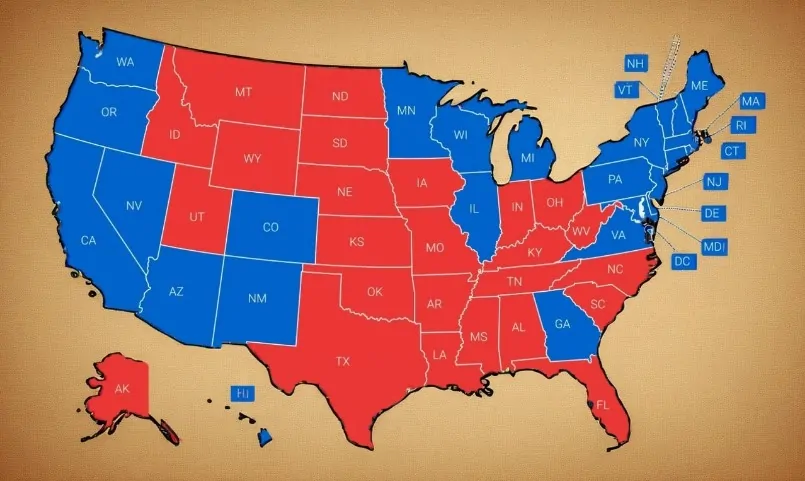
Blue States Are Countering Trump and MAGA
The political divide in the United States has deepened considerably in recent years. Reporting from state capitols and legal briefings across the nation, it’s clear that as the federal government advances MAGA-inspired conservative policies under President Trump, Democratic-led Blue States are mounting a coordinated and multifaceted resistance. Through legislation, legal action, and innovative governance, these states are redefining the boundaries of federalism.
Legislative Pushback: Passing Progressive State Laws
This legislative pushback is just one of several approaches Blue States have employed to counter federal policy. In addition to passing progressive state laws, these states are actively engaging in legal challenges, implementing sanctuary policies, and expanding voting rights. By exploring these diverse strategies, we gain a comprehensive understanding of how Blue States navigate complex political landscapes and advance their priorities in the face of federal resistance.
The Trump administration rolled back environmental regulations and withdrew the U.S. from the Paris Climate Agreement. (“President Trump Announces U.S. Withdrawal From the Paris Climate Accord”, 2017) In response, states like California, New York, and Washington took the lead on climate action. California passed ambitious legislation to achieve 100% clean energy by 2045. (“California to rely on 100% clean electricity by 2045 under bill signed by Gov. Jerry Brown”, 2018) The state also set stricter vehicle emissions standards.
More than a dozen other states adopted these standards. Together, they created a de facto national policy that car manufacturers could not ignore. However, these state-led initiatives faced criticism and challenges, such as opposition from industries concerned about the economic impact and legal battles questioning the states’ authority to set their own standards. Car manufacturers lobbied for uniform national standards, arguing that differing state regulations could increase costs and complicate production processes.

Federal attempts to limit access to healthcare included efforts to repeal the Affordable Care Act (ACA). (“9 Strategic Mistakes President Trump and Republicans Made on Health Care”, 2017) In response, Blue States expanded Medicaid and launched their own health insurance exchanges. They also enacted mandates to protect reproductive rights. States like New Jersey and Illinois passed laws safeguarding abortion access. (“Illinois officials investigate license-plate data shared with police seeking woman who had abortion”, 2025) These laws required insurance coverage for essential health benefits, regardless of federal rollbacks.
Legal Resistance: Taking Federal Policies to Court
Blue States have also relied heavily on the courts to challenge federal actions they see as overreach or as violating constitutional rights. During the Trump administration, California alone filed more than 100 lawsuits against the federal government. These cases targeted policies on immigration, the environment, and civil rights. The success rate and impact of these legal challenges were notable, with many resulting in the delay or blocking of controversial federal policies. For instance, a significant number of these lawsuits led to favorable rulings for the states, effectively reinforcing state rights and influencing national policies.
One high-profile example is the challenge to the administration’s attempt to add a citizenship question to the 2020 census. (Topaz, 2019) Led by New York and joined by several other states, the lawsuit successfully blocked the move, arguing it would undercount immigrant communities and reduce federal funding for diverse states.
State attorneys general joined forces to fight the rollback of Clean Power Plan regulations, methane emissions standards, and water protections. These legal battles often prompted federal courts to halt or delay the implementation of controversial rules.
Sanctuary Policies: Shielding Residents from Federal Immigration Enforcement
Immigration became a flashpoint during the Trump years, with the federal government adopting a hardline stance. In response, many Blue States and cities adopted “sanctuary” policies—laws and executive orders that limit state and local cooperation with federal immigration authorities.
States like California and New York enacted laws prohibiting local law enforcement from honoring ICE detainers without a judicial warrant. (“City Council Speaker Melissa Mark-Viverito, Council Members Daniel Dromm, Rafael Espinal and Immigration Committee Chair Carlos Menchaca Announce New Legislation That Will Prohibit New York City From Honoring Civil Immigration Detainers Unless A Warrant is Issued by A Federal Judge”, 2014).
Other states expanded legal aid for undocumented residents and provided state-funded health coverage for immigrant children and young adults. (“Key Facts on Health Coverage of Immigrants”, 2024) These measures shielded tens of thousands of residents from detention and deportation, even as federal authorities sought stricter enforcement. (“California Senate Bill 54 (2017)”, 2017) However, these sanctuary policies have also faced criticisms and legal challenges.
Opponents argue that such policies may hinder federal law enforcement efforts, potentially compromising public safety. Some states have faced lawsuits and threats of federal funding cuts in response to their sanctuary laws, highlighting the ongoing controversy and complexity surrounding these measures.
Expanding Voting Rights and Protecting Democracy
Some states with MAGA-aligned leadership have pursued stricter voting laws. (“Voting Itself Was on the Ballot Tuesday. Red and Blue States Went Different Ways”, 2021) In contrast, Blue States have moved in the opposite direction. They have broadened access to the ballot. States like Colorado, Oregon, and Washington implemented universal mail-in voting. (“Washington and Oregon sue over Trump election order, saying mail voters could be disenfranchised”, 2025) They also offer automatic voter registration and extended early voting periods. New York and Virginia made it easier to vote absentee and restored voting rights to former felons. (“Voting After Incarceration”, 2021)
These efforts are designed not only to expand democratic participation but also to counter concerns about voter suppression raised in the wake of Trump’s unfounded claims of widespread election fraud.
Conclusion: A Model of State Resistance
The actions of Blue States demonstrate the strength of federalism by providing concrete policy alternatives when federal directives diverge from state values and priorities. A key takeaway is that state initiatives have played a crucial role in both shaping and defending important policy areas, particularly when federal policy conflicts with state priorities. Looking ahead, this dynamic could have significant long-term implications for intergovernmental relations.
The proactive stances of these states may foster a reevaluation of the balance of power between state and federal authorities, potentially leading to a more resilient federalism that adapts to varied ideological landscapes. State-led actions not only underscore the flexibility inherent in the federal system but may also prompt federal authorities to consider more inclusive and collaborative policy development processes, accommodating diverse regional priorities.
In summary, the ongoing efforts of Blue States extend beyond resisting MAGA policies: they actively shape national direction, exemplifying how states can protect rights and drive progress. State governments play a crucial role in preserving core values and advancing policy, particularly when federal leadership takes a different direction. As Blue States continue to innovate and challenge federal policies, they contribute to a more dynamic and balanced federalism, offering lessons that could guide future intergovernmental collaboration and governance in the United States.
References
- President Trump Announces U.S. Withdrawal From the Paris Climate Accord. (2017). White House. https://trumpwhitehouse.archives.gov/articles/president-trump-announces-u-s-withdrawal-paris-climate-accord/
- California to rely on 100% clean electricity by 2045 under bill signed by Gov. Jerry Brown. (2018). Unknown Journal.
- 9 Strategic Mistakes President Trump and Republicans Made on Health Care. (2017). Unknown Journal.
- Illinois officials investigate license-plate data shared with police seeking woman who had abortion. (2025). Unknown Journal.
- Topaz, Jonathan (2019). Court Blocks Trump’s Plan to Add a Citizenship Question to 2020 Census. Unknown Journal.
- City Council Speaker Melissa Mark-Viverito, Council Members Daniel Dromm, Rafael Espinal and Immigration Committee Chair Carlos Menchaca Announce New Legislation That Will Prohibit New York City From Honoring Civil Immigration Detainers Unless A Federal Judge issues a Warrant. (2014). council.nyc.gov/press/2014/10/02/320/. https://council.nyc.gov/press/2014/10/02/320/
- Key Facts on Health Coverage of Immigrants. (2024). Kaiser Family Foundation.
- California Senate Bill 54 (2017). (2017). California State Legislature.
- Voting Itself Was on the Ballot Tuesday. Red and Blue States Went Different Ways. (2021). Unknown Journal.
- Washington and Oregon sue over Trump’s election order, saying mail voters could be disenfranchised. (2025). Unknown Journal.
- Voting After Incarceration. (2021). New York State Board of Elections.