Understanding the Different Types of Palletizing Systems
In any production or distribution facility, efficiency is key. Palletizing, the process of loading goods onto a pallet for shipping and storage, is a critical final step in the packaging line. Selecting the right palletizing system can dramatically improve operational speed, worker safety, and overall productivity. Understanding the different types of palletizing systems will help you choose the best option for your operational needs.
Manual Palletizing
Manual palletizing is the most traditional method, involving workers physically lifting and stacking products onto pallets. This approach requires no specialized machinery, making it the least expensive option to implement. It is best suited for small-scale operations with low production volumes or businesses handling irregularly shaped items that are difficult for machines to manage.
However, manual palletizing is physically demanding, increasing the risk of workplace injuries. It is also the slowest method and can lead to inconsistent stack quality, which may cause instability during transport.
Semi-Automatic Palletizing
Semi-automatic palletizing systems offer a middle ground between manual labor and full automation. In this setup, an operator arranges products into a layer, and then the machine lifts and places the layer onto the pallet. This reduces the physical strain on workers, as they no longer have to lift heavy loads.


These systems, which include equipment like pallet dispensers and turntables, improve both speed and stacking consistency compared to manual methods. They are a great fit for operations looking to increase output and enhance worker ergonomics without investing in a fully automated solution.
Automatic Palletizing
Automatic palletizing systems use machinery to handle the entire process, from arranging products to stacking them on pallets. These systems, which include conventional palletizers, operate at high speeds and can handle a consistent flow of uniform products. They are ideal for high-volume production lines that prioritize speed and consistency.
While the initial investment is significant, automatic systems reduce labor costs, minimize human error, and greatly improve workplace safety. For businesses looking to scale their operations, these systems provide a reliable and efficient solution.
Robotic Palletizing
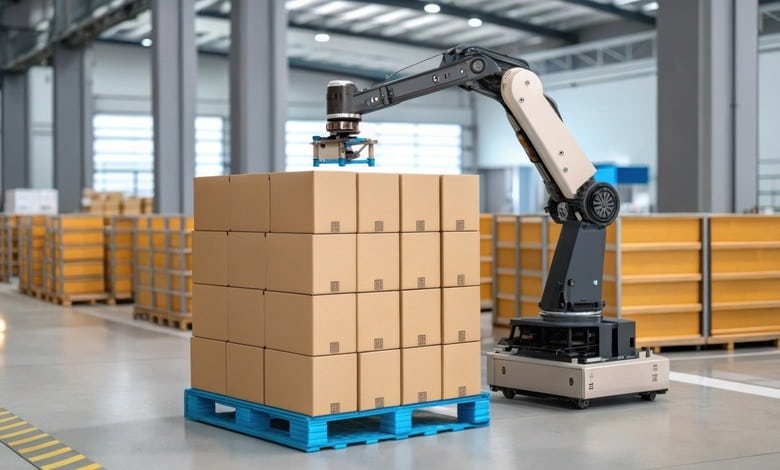
Robotic palletizing utilizes industrial robots to pick and place products onto pallets. You can program these highly flexible systems to handle various product sizes, patterns, and complex stacking requirements.
Robotic palletizers are particularly beneficial for operations with multiple product lines or those that require frequent changeovers. They offer a compact footprint compared to conventional automatic systems and can manage delicate or heavy items with precision. For businesses with a desire for maximum efficiency and automation, robotic palletizing is the premier choice.
Choosing the right palletizing system to meet your needs depends on several factors, including your production volume, product variety, budget, and long-term business goals. By understanding the different types of palletizing systems and evaluating the pros and cons, you can streamline your packaging process, boost efficiency, and support your company’s growth.