
Essential Skills Every Arborist Needs To Master
Working with trees requires more than just a love for the outdoors. Professional arborists combine technical expertise with physical skill to maintain the health and safety of urban forests, residential landscapes, and commercial properties. Whether you’re considering a career in tree care or looking to advance your current skills, understanding the essential skills every arborist needs to master forms the foundation of success in this rewarding field.
Plant Science Knowledge
Understanding how trees grow, respond to stress, and interact with the environment separates skilled arborists from basic tree trimmers. This biological knowledge helps professionals make informed decisions about pruning timing, disease treatment, and long-term tree health management.
Tree physiology encompasses everything from root systems and nutrient transport to seasonal growth patterns and stress responses. Arborists who grasp these concepts can better predict how trees will react to various treatments and environmental conditions.
Developing the essential skills every arborist needs to master requires dedication, proper training, and ongoing practice. Many professionals start with entry-level positions that offer hands-on experience under the guidance of experienced supervisors. Formal education programs and industry certifications can accelerate skill development and improve career prospects.
Equipment Safety Protocols
Working with trees involves huge risks, making safety knowledge nonnegotiable. Professional arborists must understand fall protection systems, proper equipment inspection procedures, and hazard assessment techniques before attempting any climbing or cutting work.
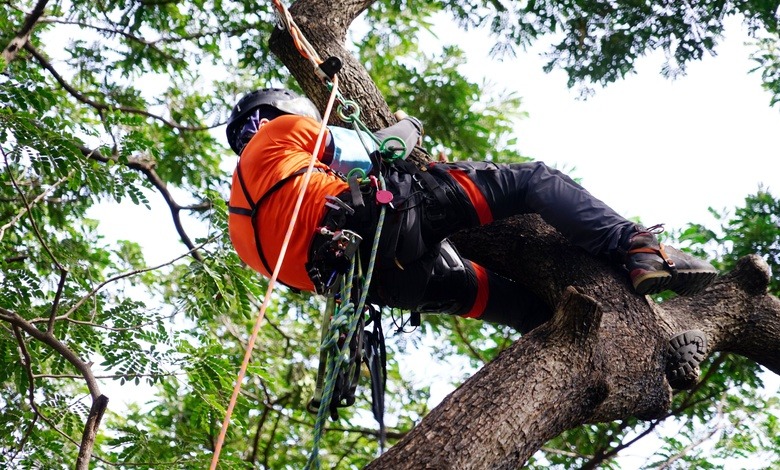
Rope management techniques for arborists represent a critical component of workplace safety, as improper rigging can lead to equipment failure or loss of control during tree removal operations. These systems require regular practice and ongoing education as new techniques and equipment enter the market.
Climbing and Rigging Expertise
Physical climbing skills allow arborists to access all parts of a tree safely and efficiently. This involves more than just getting up and down; skilled climbers can position themselves for optimal cutting angles while maintaining three points of contact and managing their equipment.
Rigging techniques also help arborists control the direction and speed of falling branches or tree sections. This becomes especially important in confined spaces where dropped wood could damage property or endanger people nearby.
Cutting and Pruning Techniques
Proper cutting techniques promote tree health while meeting a client’s desired aesthetic or safety needs. Understanding where and how to make cuts affects everything from wound closure to future growth patterns. Poor cuts often create entry points for disease or result in weak branch attachments that fail during storms.
Different pruning objectives require different approaches, and skilled arborists match their pruning strategy to the tree’s condition, species characteristics, and the property owner’s goals.
By building a strong foundation in these core competencies, aspiring arborists position themselves for success in whatever direction their career takes them.