How To Optimize Your Palletizing Process
Palletizing is a fundamental step in any supply chain. For distribution centers and warehouses, it’s integral to maximize efficiency during the palletizing process. Here, we’ll look at ways to optimize your palletizing process with practical solutions and advanced technology integration.
Understanding the Palletizing Process and Its Importance
Before we get into optimization and efficiency strategies, let’s review what palletization means and its importance for distributors and storage facilities. The palletizing process involves strategically placing products onto a pallet in a stable and organized manner. This typically requires aligning items in layers, distributing weight evenly, and utilizing materials like stretch wrap or strapping for added security.
Proper palletizing minimizes the risk of damage during transit by tightly securing goods and protecting them against movement and potential impacts. Beyond protecting products, an efficient palletizing process maximizes space on transportation vehicles and in warehouses, contributing to cost savings and a more sustainable supply chain. By investing in skilled labor, automation, or advanced equipment, businesses can enhance their palletizing practices and achieve greater operational efficiency.
Identifying Common Palletizing Inefficiencies
The first step to optimizing your palletizing process is to identify areas where you can improve. Many warehouses experience bottlenecks in their palletizing operations. One common issue is inconsistent stacking patterns, which can cause unstable loads and potential damage during transit.


Another significant inefficiency stems from manual handling. Relying solely on human labor for this repetitive task can cause slower speeds, increase the risk of injury, and produce higher error rates. Delays can also occur when there is a lack of clear communication between the production line and the palletizing station, causing unnecessary downtime.
Practical Solutions for Improvement
To increase speed and accuracy in your process, you can implement several practical strategies. Standardizing your pallet patterns is a crucial first step. Develop and document specific stacking configurations for different products to confirm consistency and stability.
Training your staff on these standardized procedures empowers them to work more effectively and reduces the likelihood of errors. You should also organize the workspace to minimize movement and verify the accessibility of all necessary materials, like shrink wrap and labels. A well-organized environment directly contributes to a smoother, faster workflow.
Integrating Technology for Greater Gains
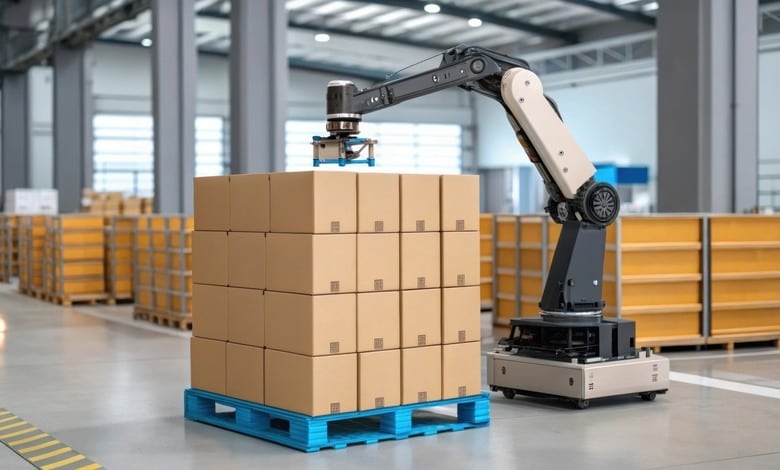
Integrating advanced automation solutions is a transformative step for your palletizing process. Palletizing robots improve efficiency in warehouses and distribution centers thanks to their continuously remarkable precision and speed. These systems handle the heavy lifting, freeing up your employees to focus on more complex tasks that require human oversight.
Warehouse management software can also synchronize the flow of goods from production to palletizing, providing real-time data to prevent bottlenecks before they happen. This level of automation and data integration elevates your process from simply functional to highly efficient.
Building a More Efficient Warehouse
Adjusting your palletizing process can provide significant benefits, from reducing product damage to increasing throughput. By identifying inefficiencies, implementing standardized procedures, and embracing technology, you can create a more streamlined and cost-effective operation. A well-executed palletizing strategy is a cornerstone of a successful supply chain.