
Taxpayer-Funded AI: Genesis Mission is Corporate Welfare
The federal government’s new Genesis Mission—a multi-billion-dollar project run by the Department of Energy (DOE) aimed at achieving global technology dominance through Artificial Intelligence (AI)—has been hailed as a necessary national effort. However, critics are raising a fundamental question: if taxpayers pay for the revolutionary research, why does the private sector reap the majority of the profits?
This investment perfectly illustrates the economic system often criticized as: “We socialize the costs, and then privatize the profits.” This model, already well-established in fields like healthcare and university research, is now being supercharged by the massive computational power of the Genesis Mission. Understanding this dynamic is key to understanding who truly benefits from the future of American innovation.
The Policy Engine: Bayh-Dole and the Profit Transfer
This approach is not an accident; it is the result of deliberate U.S. policy, most notably the Bayh-Dole Act of 1980.
Before Bayh-Dole, if a researcher at a university invented something using federal grant money, the government owned the patent. The problem, policymakers argued, was that the government often lacked the commercial expertise or budget to turn a lab discovery into a usable product. The research would “sit on a shelf,” trapped in what is often called the “Valley of Death”—the costly and risky gap between a successful lab experiment and a safe, mass-produced product.


Bayh-Dole solved this by allowing universities and non-profits that receive federal funding to retain the patent. They could then license that patent exclusively to a single private company.
The rationale is clear: allowing a private company and its shareholders to capture massive profits provides the necessary financial incentive to undertake the final, risky, multi-billion-dollar step of commercialization. Without the promise of a large monetary reward, companies would likelyn’t bother taking the risk of bringing a life-saving drug or a new critical material to market. But this system inherently concentrates wealth generated by public funds in the hands of a few private entities.
Genesis Mission: A Multi-Billion-Dollar Scheme
The Genesis Mission applies this policy to the biggest scientific tool ever created: AI and supercomputers. The process of investment and profit extraction can be broken down into three distinct stages, all designed to funnel breakthroughs to the private sector:
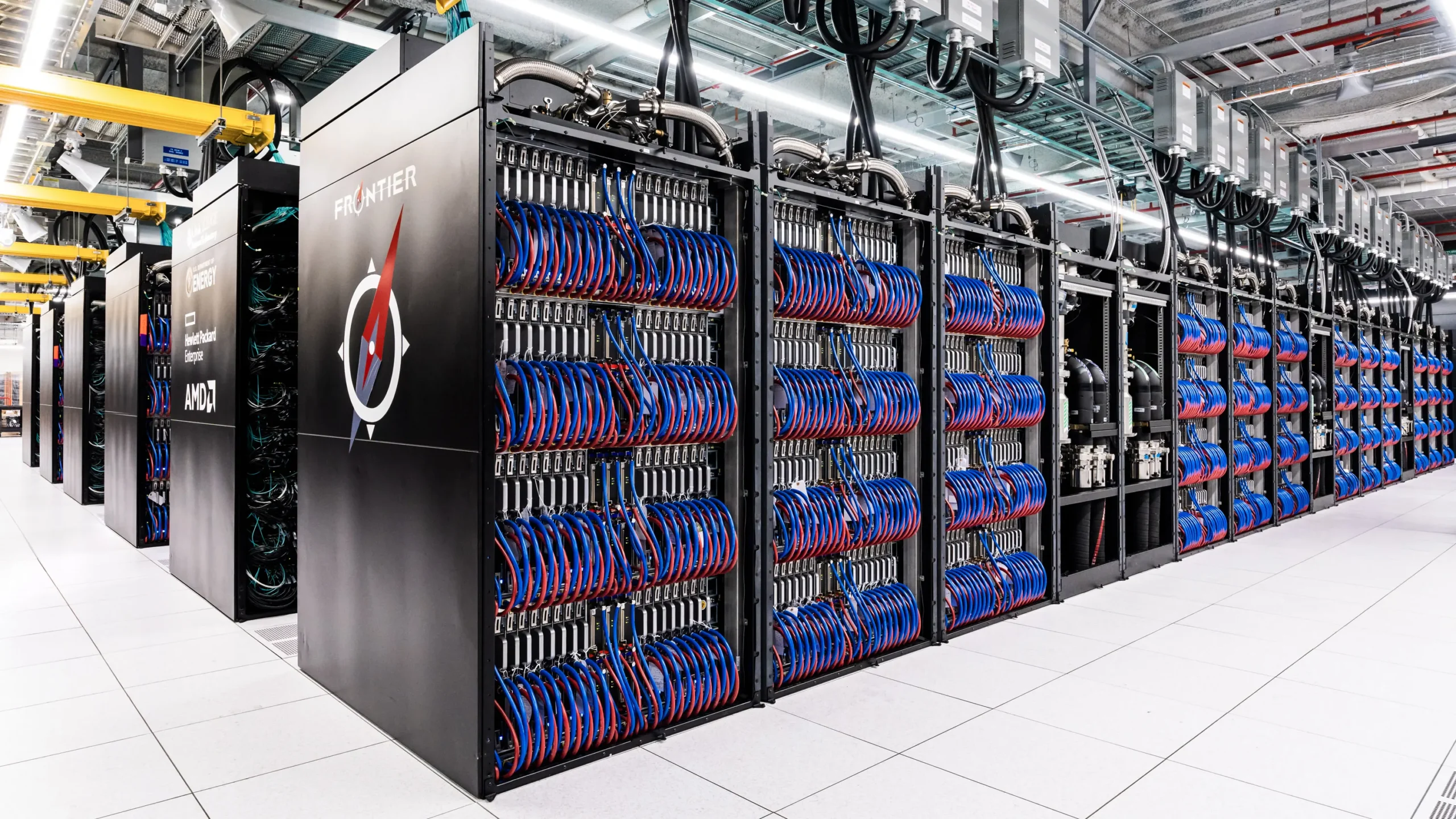
- Stage 1: Foundational Tools (Socialized Cost): U.S. Taxpayers pay to build the non-transferable infrastructure. This includes constructing and operating the American Science and Security Platform (The Platform), managing the massive supercomputers, and curating decades of unique federal datasets. This is the highest-risk, highest-cost phase, funded entirely by the public budget.
- Stage 2: Breakthroughs (Public IP): U.S. Taxpayers continue to pay salaries and operating costs as AI agents on The Platform generate new, foundational scientific advances in high-risk areas such as fusion energy and advanced manufacturing. The resulting breakthroughs are initially considered public intellectual property (IP).
- Stage 3: Commercialization (Privatized Profit): Private-Sector Partners (corporations) step in. They use the policies established by the Executive Order, which mandates creating “clear policies for ownership, licensing, trade-secret protections, and commercialization,” to license this public IP exclusively. The private company then invests its own capital in the final scale-up, and it and its shareholders reap the profits from selling the final product to the public.
The Core Debate: Efficiency vs. Equity and Displacement
The Genesis Mission forces a public reckoning over whether the current system is fair, especially when it comes to its impact on employment.
- Proponents argue the model is ultimately efficient. They maintain that the public’s primary return is the availability of the solution—be it a faster drug or cheap, clean energy—and that this benefit outweighs the concentration of wealth. Without the profit motive, the products wouldn’t exist, and the public would get nothing from their initial investment.
- Critics argue that the public is being double-charged. Taxpayers pay for the risky R&D, and then pay market price (and massive profits) for the final product.
Furthermore, unlike a new cancer drug, the core technology of the Genesis Mission—advanced, autonomous AI—is designed to replace expensive human labor. Critics contend that Americans are financing a technology that will create a massive wave of technological unemployment across white-collar and specialized roles, without any compensating safety net (like a Universal Basic Income or massive retraining funds) included in the mandate. This lack of compensation for the displaced workforce represents a critical failure of the current “socialize costs” model. Critics suggest the government should retain a larger stake in the profits, or at least use its patent leverage to guarantee lower prices or broader public access to the resulting innovations.
In the end, the Genesis Mission is a clear, purposeful continuation of the American system of state-directed industrial policy. It uses public funds to create foundational technologies, but the structure ensures that the immense wealth generated from the resulting AI-accelerated innovation will primarily flow to private shareholders.




Awesome! Its genuinely remarkable post, I have got much clear idea regarding from this post
Your blog is a beacon of light in the often murky waters of online content. Your thoughtful analysis and insightful commentary never fail to leave a lasting impression. Keep up the amazing work!