
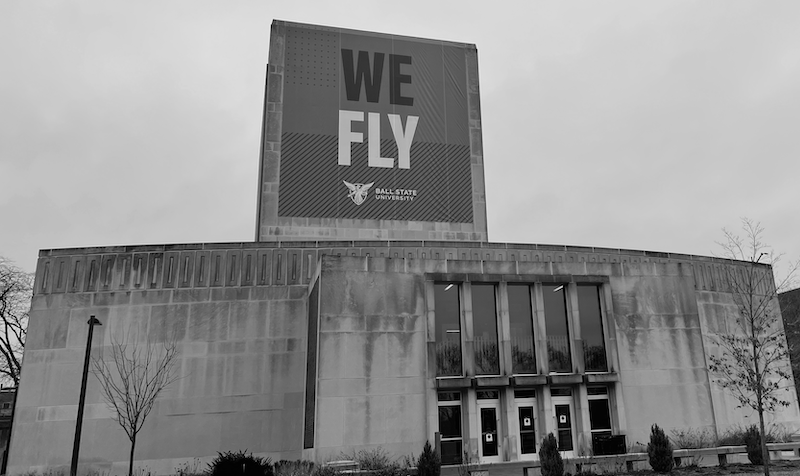
Ball State: Mearns Fires Employee Over Charlie Kirk Post
On September 17, 2025, Ball State University terminated Suzanne Swierc, director of health promotion and advocacy, over a personal Facebook post she made concerning the recent assassination of conservative activist and Turning Point USA co-founder Charlie Kirk. The firing of Swierc, a public university employee, has ignited a nationwide debate about the limits of free speech, the role of social media in professional life, and the political polarization that has consumed public discourse. This decision by Ball State has not only drawn the attention of the media but has also garnered a response from Indiana Attorney General Todd Rokita, who praised the university’s action. The incident highlights the complex and often precarious balance between an individual’s right to express their personal opinions and the expectations of professional conduct, particularly for those in leadership roles at public institutions.
The Controversial Facebook Post
The post that led to Swierc’s termination was made on her private Facebook page. While the original post has been removed, screenshots shared online by others, including Indiana Attorney General Todd Rokita, captured the content. The post read:
“Let me be clear: if you think Charlie Kirk was a wonderful person, we can’t be friends. His death is a tragedy, and I can and do feel for his wife and children. Charlie Kirk’s death is a reflection of the violence, fear, and hatred he sowed. It does not excuse his death, AND it’s a sad truth. The shooting is a tragedy, and I can and do feel for a college campus experiencing an active shooter situation. The deaths of Melissa and Mark Hortman, the children shot and killed in Minneapolis last month, and the children shot in Colorado today are all tragedies that also deserve your attention. Charlie Kirk excused the deaths of children in the name of the Second Amendment.”
Swierc’s comments were immediately met with outrage from conservatives and supporters of Kirk, who accused her of celebrating or rationalizing his murder. Indiana Attorney General Todd Rokita, a prominent critic of what he calls “woke” education, was quick to condemn her remarks as “vile.” Rokita, who had previously created an “Eyes on Education” portal for Hoosiers to report educators making inappropriate comments, used Swierc’s post as a prime example of the kind of rhetoric he sought to combat.

The University’s Stance and Legal Justification
In a statement confirming her termination, Ball State University cited “significant disruption” to the institution as the primary reason for Swierc’s dismissal. The university stated that her post was “inconsistent with the distinctive nature and trust” of her leadership position. Legal experts note that while the First Amendment protects public employees’ speech on matters of public concern, this protection is not absolute. The courts have long held that universities and other public institutions can discipline employees if their speech disrupts operations or undermines the trust placed in their position, as outlined in the legal precedent Hedgepeth v. Britton. In this case, the university argued that the public outrage and attention directed at Swierc’s post created a hostile and disruptive environment that justified her termination.
The Hypocrisy of “MAGA Cancel Culture”
The reaction to Swierc’s firing has brought to light a significant hypocrisy often observed within the MAGA movement and its allies: the simultaneous condemnation of “cancel culture” while actively engaging in it. The term “cancel culture” is frequently used by conservatives to describe a movement they believe is aimed at silencing and punishing individuals—especially those with right-leaning views—for their opinions. They argue that this practice stifles free speech and promotes a climate of fear.
However, in the case of Suzanne Swierc, and others like her who have been fired for comments about Kirk, the very people who decry cancel culture have become its most ardent practitioners. Indiana Attorney General Todd Rokita, who has spoken out against “woke cancel culture,” created an online portal specifically for the purpose of reporting and potentially “canceling” educators whose views he disagrees with. Similarly, other prominent right-wing figures and media outlets have amplified the outrage, putting pressure on institutions to fire employees who express sentiments critical of Kirk.
This behavior reveals that for many within the MAGA movement, the issue isn’t “cancel culture” itself, but rather who is being “canceled.” When it is a person on the left being removed from their position for expressing controversial views, the action is framed as a necessary consequence, an act of “accountability.” But when the same fate befalls a conservative, it is immediately labeled as a threat to free speech. This double standard underscores the deeply partisan nature of the “cancel culture” debate and highlights how the term has become a political weapon rather than a consistent philosophical stance.
This video provides more context on the Ball State employee’s termination: